


When we plan custom home designs for a hot climate, we need to think differently. The sun and heat are big factors. Our goal is to make homes comfortable without using too much energy. We’ll look at how we build and what materials we use. This helps make sure our homes are good for living in and good for the planet.
Key Takeaways
- We should pick the building site carefully and position the house to work with the sun, not against it. This means thinking about where the sun rises and sets.
- Using smart design ideas that don’t need much power, like letting the wind cool the house naturally, is a good way to save energy.
- The stuff we build with matters a lot. Light-colored roofs and walls reflect heat, and we can use windows and screens to let air flow through.
Optimizing Custom Home Designs For A Hot Climate
When we plan custom homes for warmer regions, we have to think differently about how we build. It’s not just about slapping on some extra paint; it’s about designing the whole house to work with the heat, not against it. Our goal is to keep the inside cool and comfortable without needing the air conditioner running all day long. This means looking at where we put the house on the land and how it faces the sun, and also thinking about how air moves through the building.
Strategic Site Selection And Orientation
Where we build and how we angle the house makes a big difference. We want to use the natural landscape to our advantage. This might mean:
- Choosing a spot that gets shade from existing trees or hills. If there aren’t any, we might plan to plant trees that will grow to provide shade later.
- Orienting the longest sides of the house to face north and south. This way, the smaller ends of the house face the hot morning and afternoon sun, reducing how much heat gets in through windows.
- Considering prevailing breezes. We want to position the house so that natural winds can flow through it, helping to cool things down.
We’ve found that a little bit of thought put into the site and orientation upfront can save a lot of energy and discomfort down the road. It’s about working with nature, not fighting it.
Passive Cooling Techniques For Energy Efficiency
Passive cooling is all about using smart design to keep the house cool without relying heavily on mechanical systems like air conditioners. We can achieve this through several methods:
- Overhangs and Awnings: These are built over windows and doors to block direct sunlight, especially during the hottest parts of the day. Think of them like a hat for your windows.
- Light-Colored Surfaces: Using light colors for roofs and exterior walls reflects more sunlight away from the house compared to dark colors, which absorb heat.
- Ventilation: Designing the house to allow for good airflow is key. This includes:
- Cross-ventilation: Placing windows and doors on opposite sides of rooms to let breezes pass through.
- Stack effect: Designing taller spaces or using vents near the roof to let hot air rise and escape, drawing cooler air in from lower openings.
- Thermal Mass: Using materials like concrete or brick in certain parts of the house can absorb heat during the day and release it slowly at night when it’s cooler outside. This helps keep indoor temperatures more stable.
We often look at a simple diagram to explain how these elements work together. For example, imagine the sun’s path:
| Feature | Morning Sun (East) | Midday Sun (South) | Afternoon Sun (West) |
|---|---|---|---|
| Window Placement | Small, shaded | Moderate, shaded | Small, shaded |
| Roof Overhang | Short | Long | Short |
| Wall Material | Reflective | Reflective | Reflective |
Material Choices For Sustainable Living In Warm Regions
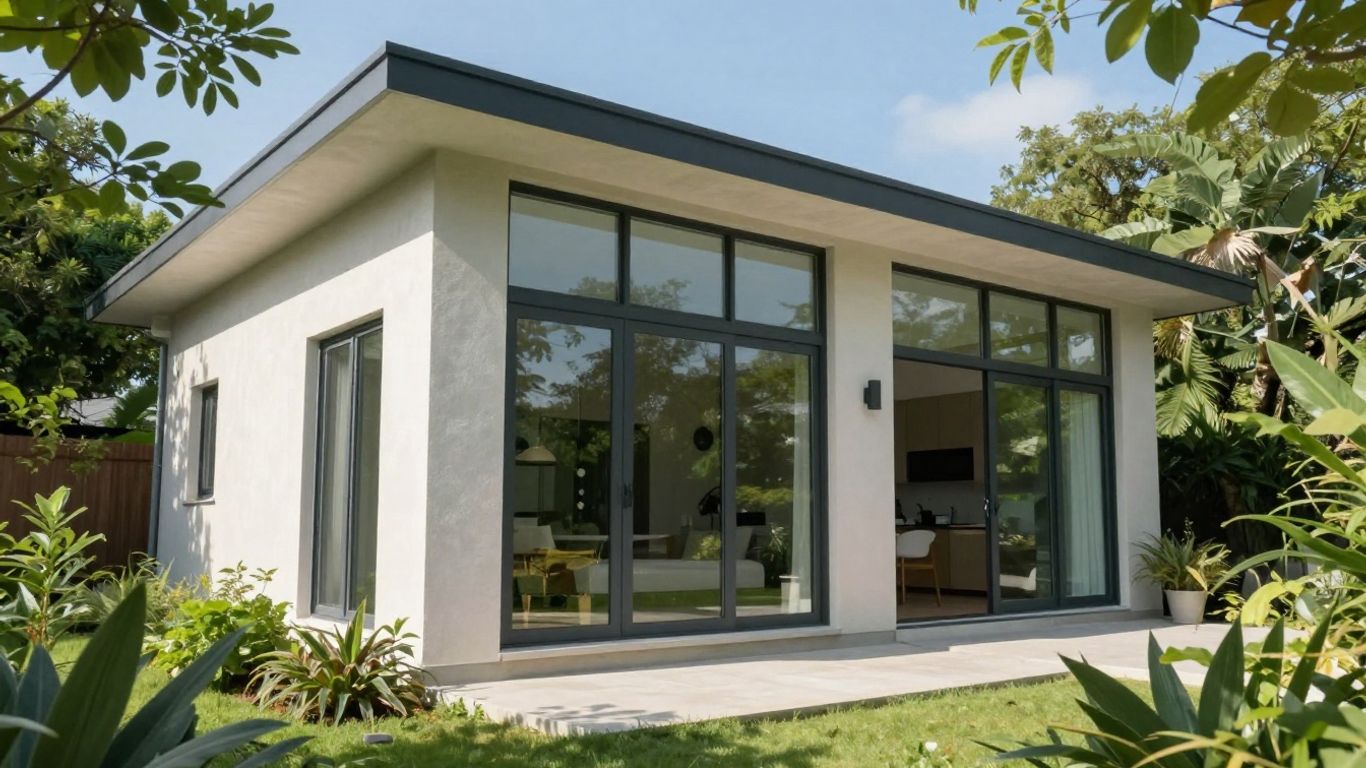
When we’re designing homes for warmer climates, the materials we pick play a big role. It’s not just about how things look; it’s about how they help keep the house cool and use less energy. We need to think smart about what goes on our roofs and walls, and how we can let the air move naturally.
Selecting Reflective Roofing And Wall Materials
Our roofs and walls are the first line of defense against the sun’s heat. Using materials that reflect sunlight instead of absorbing it makes a huge difference. Think about lighter colors for your roof. White or light gray shingles, metal roofing with a reflective coating, or even special cool roof tiles can bounce a lot of that solar energy right back into the sky. This means less heat gets into your attic and then into your living spaces. The same idea applies to walls. We can use light-colored paints, stucco, or siding. Some newer materials are even designed with reflective properties built right in. Choosing these kinds of surfaces helps lower your home’s temperature significantly, reducing the need for air conditioning. It’s a simple change that pays off over time.
Here’s a quick look at some common roofing materials and their solar reflectance:
| Material Type | Typical Color | Solar Reflectance (Approx.) |
|---|---|---|
| Asphalt Shingles | Dark | 0.05 – 0.20 |
| Asphalt Shingles | Light | 0.20 – 0.40 |
| Metal Roofing (Coated) | White/Light | 0.60 – 0.85 |
| Clay Tiles | Terracotta | 0.25 – 0.45 |
| Cool Roof Membrane | White | 0.75 – 0.90 |
Incorporating Natural Ventilation And Shading Elements
Beyond just reflecting heat, we can design our homes to work with the climate, not against it. Natural ventilation is key. This means setting up our homes so that breezes can flow through them, carrying heat away. We can do this with well-placed windows and vents. Think about having windows on opposite sides of a room or house to create cross-breezes. Clerestory windows, which are high up, can also help let hot air escape near the ceiling. Then there’s shading. Overhangs on roofs, awnings, and even strategically planted trees can block direct sunlight from hitting windows and walls during the hottest parts of the day. This is especially important for west-facing windows, which get intense afternoon sun. Louvered shutters or exterior blinds can also be very effective. We want to keep the sun’s rays from even touching the glass or the wall in the first place.
We should also consider how the building itself can help manage heat. Materials that can store heat during the day and release it slowly at night, like concrete or brick, can be useful if managed correctly with ventilation. However, in very hot climates, the focus is often more on immediate cooling and reducing heat gain. It’s a balancing act.
Here are some ways we can add shading:
- Roof Overhangs: Extend the roofline beyond the walls to shade windows and walls below.
- Awnings and Canopies: Fabric or metal structures that can be added over windows and doors.
- Exterior Shutters or Blinds: These can be opened or closed to control sunlight.
- Landscaping: Planting deciduous trees on the south and west sides provides shade in summer but lets sun through in winter.
Wrapping Up Our Hot Climate Home Ideas
So, we’ve looked at a bunch of ways to make our homes more comfortable when the temperatures really climb. It’s not about reinventing the wheel, just making smart choices. Thinking about how we build and what materials we use can make a big difference in how cool our houses stay, and how much we rely on air conditioning. We hope these ideas give you a good starting point for your own projects, whether you’re building new or just want to improve what you have. A little planning now can lead to a lot more comfort later, and maybe even save some money on energy bills. It’s worth the effort, really.
Frequently Asked Questions
Why is it important to think about where we build our homes in hot places?
When we build in warm areas, picking the right spot is super important. We want to use the sun to our advantage, not against us. By placing the house smartly, we can catch cool breezes and avoid the hottest sun rays. This helps keep our homes cooler naturally, meaning we don’t have to run the air conditioning as much, which saves energy and money.
What kinds of building materials work best when it’s really hot outside?
We should choose materials that don’t soak up too much heat. Think about using light-colored paints or special roofing that bounces sunlight away. These choices help the outside of our homes stay cooler. Also, using materials that let air flow through them, like certain types of windows or vents, can make a big difference in keeping the inside fresh.
How can we use nature to keep our homes cool without using a lot of electricity?
We can design our homes to work with nature. Planting trees around the house can provide shade, like a natural umbrella. Using overhangs on roofs or awnings over windows also blocks the sun. We can also set up windows and vents so that warm air can escape easily and cooler air can come in, creating a nice breeze throughout the house. These simple tricks help a lot.
