


As we face another Tucson summer, keeping our homes cool without running up huge energy bills is on everyone’s mind. We’ve been looking into ways to make our homes work better with the heat, focusing on smart choices that save money and keep us comfortable. This article explores some practical ideas for an energy efficient home design that can make a real difference.
Key Takeaways
- We can make our homes cooler naturally by placing windows smartly and using shades, while also letting air flow through the house effectively during Tucson’s hot months.
- Choosing the right building materials, like light-colored roofs and walls, along with good insulation, helps keep the heat out and reduces the need for air conditioning.
- Using technology, such as automatic shades and smart thermostats, can help manage our home’s temperature and save energy without us having to think about it all the time.
Maximizing Natural Cooling For Energy Efficient Home Design
When we think about designing homes for the Tucson summer, the first thing that comes to mind is how to keep the heat out without running the air conditioner 24/7. It’s all about working with nature, not against it. We can make our homes much more comfortable and save a good chunk of money on energy bills by being smart about how we design them from the start.
Strategic Window Placement And Shading
Windows are a big deal when it comes to heat gain. In Tucson, the sun can be pretty intense, especially during the summer months. We need to be really careful about where we put our windows and how we protect them. Placing windows on the east and west sides of the house should be done with extreme caution, as these orientations receive the harshest direct sunlight for much of the day.
Here are some things we consider:
- Orientation: We try to position the majority of our windows on the north and south sides. North-facing windows get consistent, indirect light, which is great for cooling. South-facing windows get more direct sun, but we can manage that with overhangs.
- Overhangs: Properly sized roof overhangs are a lifesaver. They block the high summer sun from hitting windows but still let in the lower winter sun when we actually want some warmth.
- Shading Devices: Beyond overhangs, think about exterior shutters, awnings, or even strategically planted trees. These external shades are far more effective than interior blinds because they stop the sun before it even hits the glass.
- Window Type: We look for windows with low-E coatings and double or triple-pane glass. These help reflect heat away from the house.
We’ve found that a well-thought-out window strategy can make a huge difference in how a home feels, even before you turn on a fan.
Ventilation Strategies For Tucson Summers
Getting the hot air out and bringing cooler air in is another key part of natural cooling. We want to create airflow that helps dissipate heat, especially during the cooler parts of the day and night.
- Cross-Ventilation: This is where we design the house so that breezes can flow straight through it. Having windows and doors on opposite sides of the house allows for this.
- Stack Effect (Chimney Effect): Hot air rises. We can use this to our advantage by having openings low down in the house and higher up. As warm air rises and exits through the upper openings, it pulls cooler air in through the lower ones.
- Night Flushing: On nights when the temperature drops significantly, we can open up the house to let in the cooler night air. This cools down the building’s thermal mass, which then helps keep the house cooler the next day.
We often use ceiling fans to help move air around inside, making it feel cooler even if the actual temperature hasn’t dropped much. It’s all about creating a comfortable environment using passive methods as much as possible.
Building Materials And Insulation For Desert Climates
When we think about designing homes for the Tucson summer, the materials we choose play a huge role. It’s not just about how a house looks; it’s about how it feels inside when that sun is beating down.
Choosing Reflective Roofing And Wall Materials
We need surfaces that send the sun’s heat packing. That’s where reflective materials come in. Think about your roof. A dark roof absorbs a lot of heat, making your attic and the rest of your house hotter. We can opt for lighter colors or special coatings that reflect solar radiation. The same idea applies to our walls. Materials with a high solar reflectance index (SRI) are our friends here. This means they bounce back more sunlight and absorb less heat. We’ve seen great results with light-colored stucco, metal roofing with reflective coatings, and even certain types of masonry that are designed to stay cooler.
Here’s a quick look at how different roof colors can affect surface temperature:
| Roof Color | Typical Surface Temperature (°F) |
|---|---|
| Black | 150+ |
| Dark Gray | 130-140 |
| Light Gray | 110-120 |
| White | 90-100 |
The Importance Of High-Performance Insulation
Even with reflective surfaces, we still need to stop the heat that does get absorbed from coming inside. This is where good insulation is key. We’re not just talking about stuffing some pink fluffy stuff in the attic. We need insulation that works hard, especially in a place like Tucson where temperatures can get extreme. This means looking at the R-value, which is a measure of how well the insulation resists heat flow. The higher the R-value, the better it insulates. We should consider:
- Spray foam insulation: It expands to fill gaps and cracks, creating a really good seal.
- Rigid foam boards: These are great for walls and foundations, offering a consistent R-value.
- Cellulose insulation: Made from recycled paper, it’s a good option for attics and walls.
Proper insulation acts like a barrier, keeping the cool air in during the summer and the warm air in during the winter. It’s a two-way street for comfort and savings.
We also need to pay attention to the whole building envelope. This means not just the walls and roof, but also the foundation and any windows or doors. Air sealing is just as important as insulation. Little gaps and cracks can let a surprising amount of hot air into our homes. We should make sure all these areas are properly sealed and insulated to get the best performance.
Integrating Smart Technology For Optimal Comfort
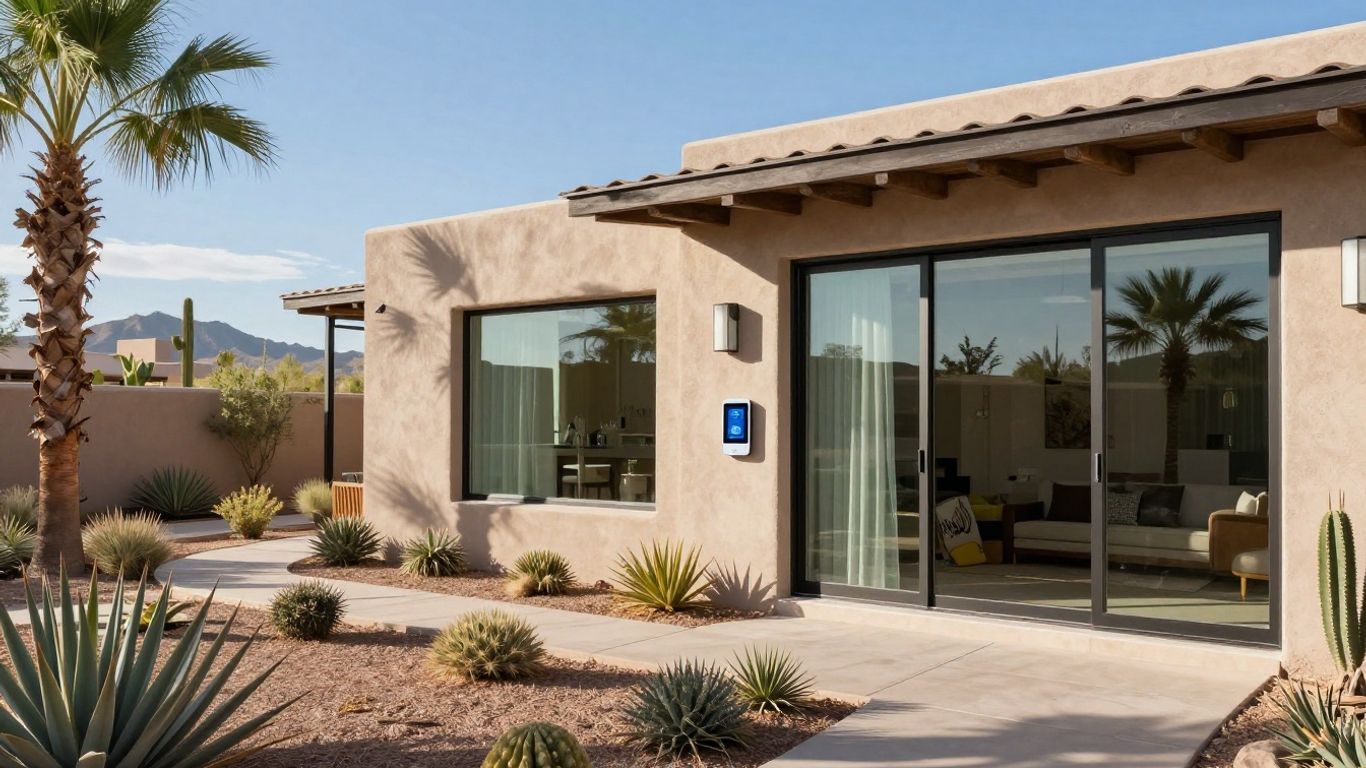
We can make our homes work smarter, not just harder, when it comes to staying cool in the Tucson heat. Integrating smart technology is a game-changer for comfort and saving energy. It’s about letting our homes adapt to the weather and our needs without us having to constantly fiddle with things.
Automated Shading and Ventilation Systems
Think about blinds or shutters that know when the sun is beating down and close themselves. That’s automated shading. It stops the heat from even getting inside in the first place. We can set schedules or link them to temperature sensors. Similarly, smart vents can open and close based on room temperature or when we’re home. This means we’re not cooling empty rooms or letting hot air circulate unnecessarily.
- Schedule based operation: Set times for shades to lower during peak sun hours.
- Sensor integration: Shades and vents react automatically to real-time temperature and sunlight.
- Remote control: Adjust settings from your phone, even when you’re away.
Smart Thermostats for Energy Efficient Home Design
Smart thermostats are probably the most common smart home device, and for good reason. They learn our habits and adjust the temperature accordingly. We can program them to lower the AC when we’re out or asleep and ramp up the cooling just before we get home. This precise control prevents wasted energy. Many also give us reports on our energy usage, helping us see where we can save even more.
We’ve found that using a smart thermostat has made a noticeable difference in our energy bills. It’s not just about setting a temperature; it’s about the system learning when we actually need the cooling and when we don’t. It feels like the house is looking out for us.
Here are some features we look for:
- Learning capabilities: The thermostat adapts to your routine over time.
- Remote access: Control and monitor your home’s temperature from anywhere via an app.
- Energy reports: Understand your cooling patterns and identify savings opportunities.
- Geofencing: Automatically adjusts temperature based on your phone’s location (e.g., turns off when you leave, starts cooling when you’re heading home).
Wrapping Up Our Desert Home Design
So, we’ve talked about a lot of ways to make our homes cooler here in Tucson during the summer. It’s not just about cranking the AC, though that’s part of it. We looked at how the outside of the house matters, like with shade and the right colors. Inside, we covered things like good insulation and windows that work for us, not against us. It all adds up to a more comfortable living space when the heat really hits. We hope this gives you some good ideas to think about for your own place. Making these changes can really make a difference in how you feel at home when it’s scorching outside.
Frequently Asked Questions
How can we make our homes cooler without using too much electricity in Tucson’s hot summers?
We can use nature’s help! By carefully placing windows and adding shades, we let in light but block the sun’s heat. Think about big overhangs or special screens. Also, we can create airflow by opening windows at the right times, like in the cooler evenings, to let hot air escape and bring in fresh air. This is called natural cooling, and it saves energy.
What kind of building materials are best for keeping a house cool in a desert climate like ours?
For our homes in the desert, we should pick materials that reflect the sun’s rays. Light-colored roofs and walls do a great job of bouncing heat away instead of soaking it up. It’s also super important to have really good insulation. This acts like a cozy blanket for your house, keeping the heat outside during the summer and inside when it’s cold. We want thick, effective insulation.
Can technology help us stay comfortable and save energy at home during hot weather?
Absolutely! We can use smart gadgets to help. Imagine shades that automatically lower when the sun is strongest, or vents that open and close on their own to improve airflow. Smart thermostats are also a big help. They learn our habits and adjust the temperature to save energy when we don’t need the house to be super cool, making sure we’re comfortable without wasting power.
