


Thinking about a basement remodel? We’ve been exploring some fresh ideas for winter projects. Our focus is on making that lower level a truly special part of your home, especially with a custom basement renovation. We want to help you create spaces that are not only good-looking but also work well for your family. Let’s look at how we can bring more light, warmth, and smart organization to your finished basement.
Key Takeaways
- We can make basements brighter by placing windows smartly and adding fireplaces for a cozy feel during our custom basement renovation.
- We’ll figure out good ways to store things, like building shelves right into the walls and using the space under the stairs with our custom basement renovation.
- Creating different areas for different activities and picking the right floors and wall treatments will make your custom basement renovation feel like a great living space.
Maximizing Natural Light and Warmth in Your Custom Basement Renovation
When we think about finishing a basement, the first thing that often comes to mind is making it feel less like a basement and more like a natural part of our home. A big part of that is getting more light down there and making it feel warm and inviting, especially during those long winter months. We’ve found that a few smart design choices can make a world of difference.
Strategic Window Placement for Basement Ambiance
Basements, by their nature, don’t have a lot of windows. If they do, they’re often small and set high up. We’ve learned that thinking carefully about where we put new windows, or even how we enlarge existing ones, is key. It’s not just about letting light in; it’s about how that light changes the feel of the space. We try to position windows to catch the sun at different times of the day. For instance, a window on the east side can bring in lovely morning light, making a breakfast nook feel cheerful. A larger window on the west can help keep a living area bright into the evening.
We also consider the type of window. While egress windows are a safety must-have, they can sometimes be quite large and might not fit the aesthetic we’re going for in a cozy den. Sometimes, we look at options like horizontal windows or even window wells that are designed to let in more light and give a better view than traditional small basement windows. It’s about balancing safety, light, and the overall look.
Here are some ideas we’ve explored:
- Consider adding more windows: Even one or two extra windows can dramatically change the feel of a room.
- Enlarge existing windows: If you have small, high windows, see if they can be made larger or lower.
- Use light-colored window treatments: Avoid heavy, dark curtains that block light.
- Install French doors or sliding glass doors: If your basement has an exit to the outside, these can let in a lot of light and offer a great view.
Incorporating Cozy Fireplace Features
Nothing says warmth and comfort quite like a fireplace, and we think they’re a fantastic addition to any basement renovation, especially for winter. It’s not just about the heat; it’s the ambiance. We’ve seen basements transformed from chilly, unused spaces into the heart of the home with the addition of a fireplace.
There are several types to consider, and the choice often depends on the space and budget. Gas fireplaces are popular because they’re easy to install and operate, offering instant heat and a realistic flame. Electric fireplaces are even simpler, often just requiring a standard outlet, and many come with built-in heaters and decorative flame effects. For those who love the traditional crackle and smell of burning wood, a wood-burning fireplace is an option, though it requires more structural considerations like a chimney.
We’ve found that placing the fireplace as a focal point in the main living area of the basement really draws people in. It creates a natural gathering spot, perfect for movie nights or just relaxing with a good book.
When planning, we always think about:
- Location: Where will it best serve the room and fit the layout?
- Type: Gas, electric, or wood-burning – each has pros and cons.
- Venting: Does it need a chimney, or can it vent through a wall or outside?
- Safety: Proper clearances and materials are non-negotiable.
Adding a fireplace is a significant upgrade that can make your basement feel like a true extension of your living space, especially when the temperatures drop.
Smart Storage Solutions for a Functional Basement Retreat
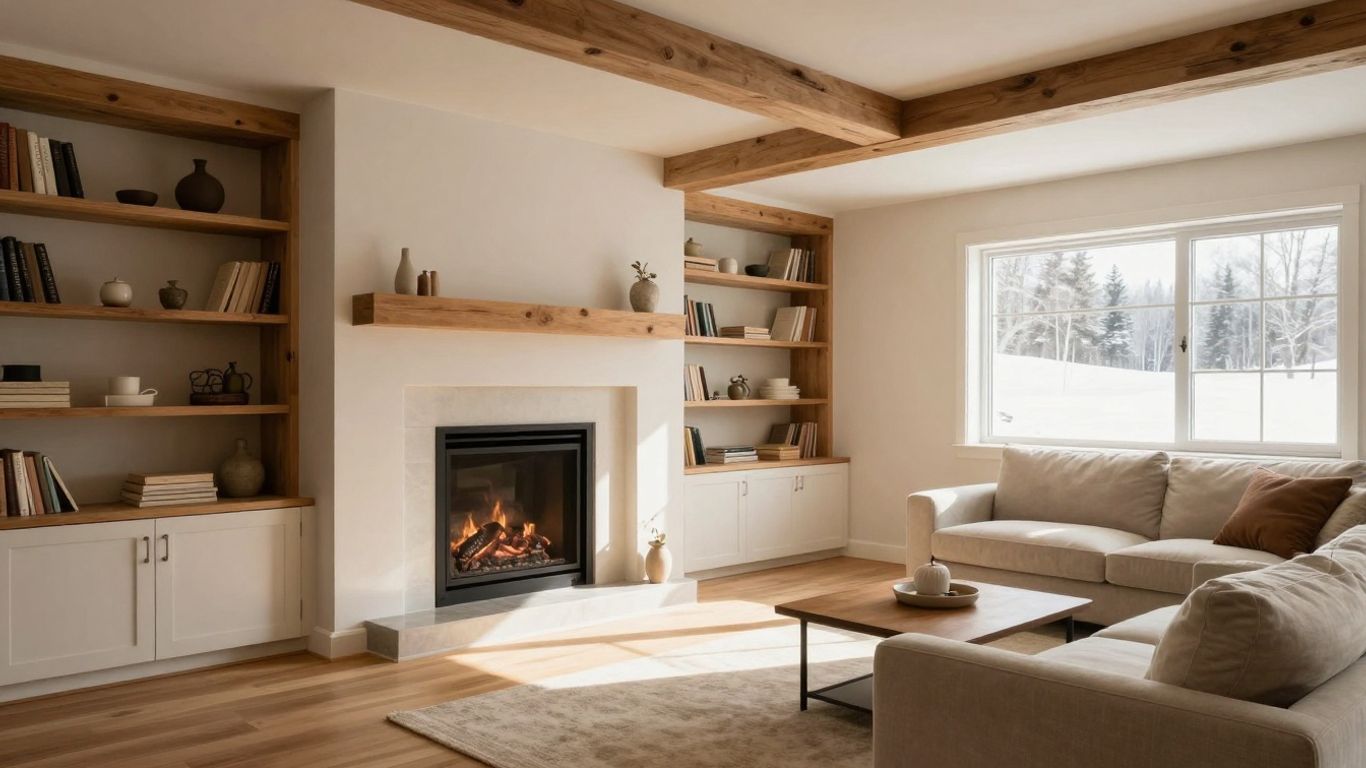
Basements often become the catch-all for items we don’t know where else to put. When we’re thinking about remodeling, we really want to make sure we’re not just creating more space, but organized space. This means planning for storage right from the start.
Built-In Shelving and Cabinetry Designs
Custom built-ins are a game-changer for basement functionality. Instead of just buying freestanding units that might not fit perfectly, we can design shelving and cabinetry that hugs the walls, fits into awkward nooks, and makes the most of every inch. Think about floor-to-ceiling bookshelves for your media room, or a bank of cabinets for craft supplies in a hobby area. We can even incorporate pull-out drawers for easier access to items stored in the back.
- Consider the depth of shelves: Deeper shelves are great for larger items, but shallower shelves can prevent clutter from piling up.
- Vary shelf heights: This allows for storage of different-sized items without wasted vertical space.
- Integrate lighting: Small LED strips under shelves can make finding things much easier and add a nice touch.
Under-Stair Storage Innovations
That space under the stairs is often wasted, but it doesn’t have to be. We’ve seen some really clever ways people are using this area. It can be transformed into anything from a mini-office nook to a hidden pantry.
Here are a few ideas we’ve explored:
- Drawers: Full-extension drawers that pull out from the wall under the stairs are fantastic for storing shoes, toys, or cleaning supplies.
- Open Shelving: Simple shelves can hold books, decorative items, or even a small pet bed.
- Cabinetry: A custom cabinet can hide away less attractive items or create a dedicated space for electronics.
When planning your built-ins or under-stair solutions, measure everything twice. It’s much easier to adjust plans on paper than to redo custom woodwork. Think about what you need to store and how often you’ll access it. This will help determine the best layout and features for your specific needs.
Creating Inviting Living Spaces Through Custom Basement Renovation
When we think about remodeling our basements, we often focus on practicalities like storage or extra bedrooms. But what about making the space feel truly welcoming, like a natural extension of our home? We’ve found that with a bit of thoughtful planning, we can transform these lower levels into genuinely inviting areas.
Designing Multi-Functional Basement Zones
Basements are often large, open spaces, which can be a blessing and a curse. Without some structure, they can feel cavernous and a bit impersonal. We like to break them down into distinct zones. This doesn’t mean building walls everywhere, but rather using furniture arrangement, rugs, and even lighting to define different areas. For example, one corner might become a cozy reading nook with a comfortable armchair and a good lamp. Another section could be set up as a game area, perhaps with a small table for cards or board games. We’ve also seen great success with creating a small home office space, separated by a bookshelf. The key is to think about how we’ll actually use the space throughout the week.
Here’s a simple way we approach zone planning:
- Identify primary uses: What are the top 2-3 things we want to do down there? (e.g., watch movies, entertain guests, kids’ play area).
- Consider flow: How will we move between these areas? Avoid blocking pathways.
- Define boundaries: Use furniture, rugs, or even different paint colors to subtly mark where one zone ends and another begins.
- Add personal touches: Incorporate decor that reflects our interests and makes the space feel like ours.
Selecting Appropriate Flooring and Wall Coverings
The materials we choose for our floors and walls play a huge role in the overall feel of the basement. Because basements can sometimes be prone to moisture, we tend to steer clear of materials that could be damaged easily. Luxury vinyl plank (LVP) or tile are fantastic options for flooring. They’re durable, water-resistant, and come in so many styles that mimic wood or stone. We’ve also had good luck with certain types of carpet tiles, which can add warmth and are easy to replace if one gets stained. For walls, standard drywall is fine, but we like to consider options that add a bit more character. Wood paneling, even a faux brick or stone veneer, can add texture and visual interest, making the space feel less like a basement and more like a finished room. Choosing materials that are both practical and aesthetically pleasing is our main goal.
When picking out finishes, we keep these points in mind:
- Durability: Basements often see more foot traffic and potential spills.
- Moisture resistance: It’s always better to be safe than sorry.
- Aesthetics: Does it fit the mood we’re going for?
- Maintenance: How easy is it to clean and care for?
We’ve learned that basements don’t have to feel cold or unfinished. By carefully planning how we divide the space and selecting materials that are both beautiful and resilient, we can create areas that we genuinely want to spend time in. It’s about making smart choices that balance form and function, turning a potentially overlooked area into a favorite spot in the house.
Wrapping Up Our Basement Ideas
So, we’ve looked at some ways to make your basement a better place, especially when it’s cold outside. It’s easy to forget about that lower level, but with a few smart changes, it can become a really useful part of your home. Think about adding better lighting, maybe some warmer flooring, or even just better insulation. These aren’t always huge projects, but they can make a big difference in how you feel down there. We hope these ideas give you a good starting point for your own basement remodel. It’s worth the effort to make that space more comfortable and enjoyable for everyone.
Frequently Asked Questions
How can we make our basement feel brighter and warmer, especially during winter?
To bring more light and a cozy feel into our basement, we can strategically place windows. Think about where the sun hits outside and how to best capture that light. Also, adding a fireplace can make a huge difference in creating a warm, inviting atmosphere, perfect for chilly winter days.
What are some clever ways to store things so our basement doesn’t get cluttered?
We can build in shelves and cabinets that fit perfectly into the space, making use of every inch. Don’t forget the often-wasted area under the stairs! We can turn that spot into useful storage for toys, books, or anything else we need to tuck away neatly.
How do we design our basement to be useful for different activities and look good too?
We can plan different areas for various uses, like a play space, a movie corner, or a quiet reading nook. Choosing the right flooring, like warm wood or comfy carpet, and wall colors that feel welcoming will tie everything together and make our basement a place we love to spend time in.
