


As the sun dips below the horizon, casting long shadows across the desert landscape, we find ourselves drawn to the comfort and beauty of our outdoor spaces. Designing these areas, especially with the unique challenges and opportunities of a desert climate, requires thoughtful planning. We want to create areas that are not only visually appealing but also functional and comfortable, allowing us to fully enjoy the cooler evening hours. This involves looking at everything from shade and materials to how we can bring the indoors out.
Key Takeaways
- We can make our outdoor areas more pleasant for desert evenings by using shade structures and picking materials that do well in the heat.
- Sunrooms offer a way to enjoy the outdoors all year, with careful attention to glass and insulation for our climate.
- Custom outdoor living designs allow us to create specific spots for different activities, like entertaining, and add touches of local nature and lighting.
Enhancing Desert Evenings with Custom Outdoor Living Designs
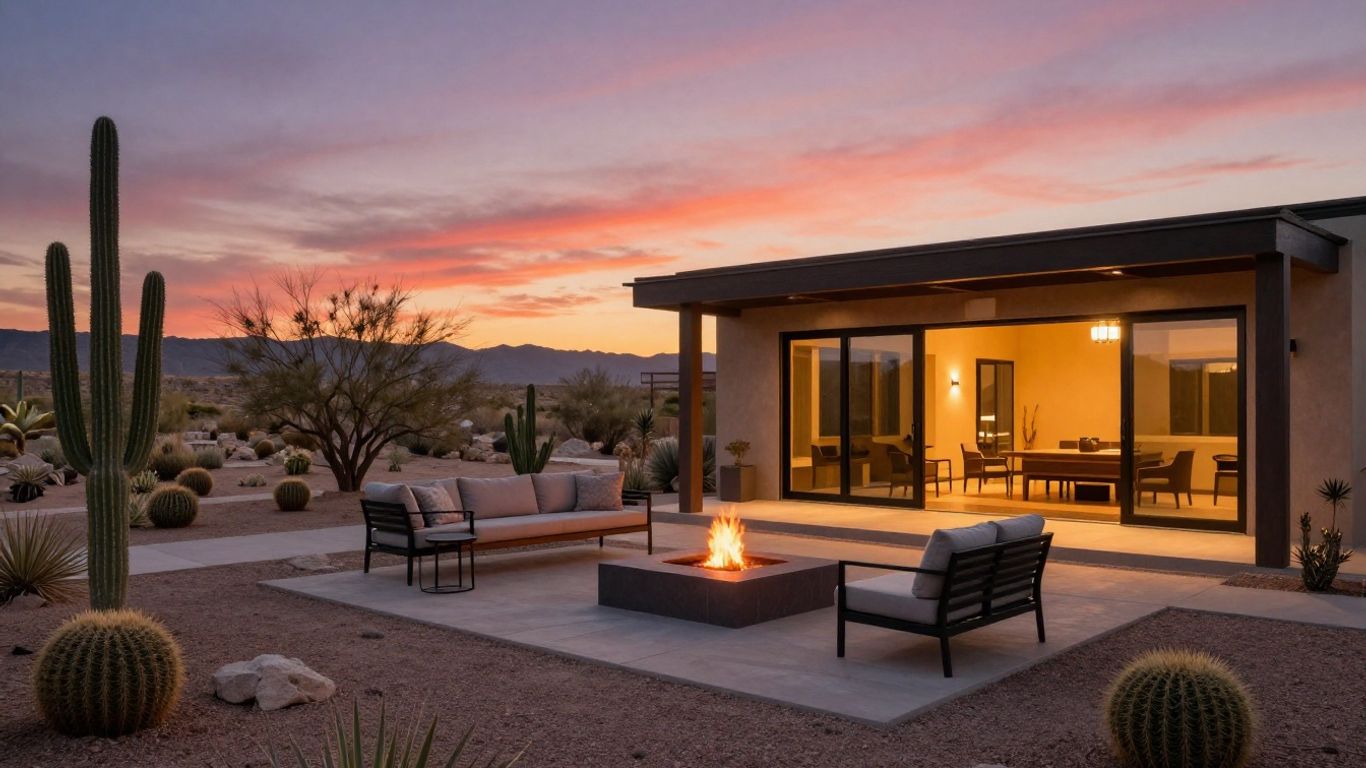
As the sun dips below the horizon in our desert landscape, the real magic begins. We often think of outdoor spaces for daytime use, but the cooler desert evenings offer a unique opportunity for enjoyment. Creating an inviting outdoor living area means thinking beyond just shade; it’s about crafting an experience. We want to extend our living space outdoors, making it a comfortable and functional part of our homes even after dark.
Incorporating Shade Structures and Cooling Features
Daytime heat can be intense, but it doesn’t have to stop us from using our patios and yards. We can use a variety of structures to provide relief. Think about pergolas with retractable canopies, which give us control over sun exposure. Misting systems are also a game-changer; they can lower the ambient temperature significantly, making a hot evening feel much more pleasant. Even simple ceiling fans on covered patios can make a big difference in air circulation. We’ve found that combining these elements creates a much more usable space.
- Pergolas: Offer partial shade and can be fitted with adjustable louvers or fabric covers.
- Shade Sails: A flexible and modern option for covering specific areas.
- Retractable Awnings: Provide shade when needed and can be stored away.
- Misting Systems: Effective for reducing temperatures in dry climates.
- Ceiling Fans: Improve airflow and create a cooling breeze.
Selecting Desert-Appropriate Materials
When we build or furnish our outdoor spaces, the materials we choose are really important. We need things that can stand up to the sun, the heat, and the occasional dust storm. Metal furniture, for instance, can get incredibly hot to the touch. We prefer materials that don’t absorb too much heat or degrade quickly. Natural stone, concrete pavers, and certain types of treated wood are good choices for flooring. For furniture, look for powder-coated aluminum, wrought iron (though it can get hot), or high-quality synthetic wicker. Fabrics for cushions and umbrellas should be UV-resistant and quick-drying. Choosing wisely means our outdoor spaces will last longer and require less upkeep.
Here’s a quick look at some material considerations:
| Material Type | Pros for Desert Use | Cons for Desert Use |
|---|---|---|
| Natural Stone/Pavers | Durable, stays relatively cool | Can be expensive, requires proper installation |
| Concrete | Affordable, versatile | Can crack with extreme temperature changes, can absorb heat |
| Powder-Coated Aluminum | Lightweight, rust-resistant, stays cooler than steel | Can be less sturdy than steel |
We’ve learned that investing in materials designed for harsh climates pays off. It means less time spent on repairs and more time enjoying the cooler evenings.
Sunroom Additions for Year-Round Enjoyment
Adding a sunroom to our homes can really change how we use our spaces, especially when the desert heat mellows out in the evenings. It’s like getting an extra room, but one that feels connected to the outdoors, no matter the season. We’ve found that these additions are fantastic for extending the usability of our homes.
Integrating Seamless Indoor-Outdoor Transitions
Getting that smooth flow between the inside of the house and the new sunroom is key. We want it to feel natural, not like you’re walking into a separate box. Think about how the flooring can continue from your main living area into the sunroom, or how large sliding doors can open up wide.
- Consider pocket doors that disappear into the walls.
- Match trim and molding styles to your existing home.
- Plan for furniture placement that encourages movement between spaces.
The goal is to make the sunroom feel like a natural extension of our existing living areas. It shouldn’t feel like a tacked-on afterthought.
Choosing Glass and Insulation for Desert Climates
When we’re picking out the glass and insulation for a sunroom in a desert climate, we have to be smart about it. We don’t want it to turn into an oven during the day, but we also want to capture some warmth when it’s cooler. It’s a bit of a balancing act.
We’ve looked at a few options for the glass:
- Low-E Coatings: These coatings help reflect heat away in the summer and keep warmth inside during cooler months. It’s a big help.
- Double-Pane Windows: Standard for good reason, they add an extra layer of insulation.
- Tinted or Coated Glass: Sometimes a slight tint can cut down on glare and heat gain without making the room feel dark.
Insulation is just as important. We need to make sure the walls, floor, and ceiling are well-insulated. This keeps the temperature more stable. We’ve found that using rigid foam insulation in the floor and walls works well. For the roof, spray foam can be a good choice because it seals up any little gaps.
Proper sealing around windows and doors is also something we can’t overlook. Even the best materials won’t work if there are drafts letting the desert air in or out.
We’ve seen that the right choices here mean we can actually use the sunroom comfortably, not just look at it. It’s about creating a space that’s pleasant to be in, whether the sun is beating down or the evening air is crisp.
Personalizing Your Space with Custom Outdoor Living Designs
Blending Functional Zones for Entertaining
When we think about our outdoor areas, we often picture a single, open space. But for truly useful and enjoyable evenings, it’s better to think in terms of zones. This means dividing your patio or deck into distinct areas, each serving a specific purpose. We might set up a comfortable seating area for chatting, a dining zone for meals, and perhaps a smaller nook for quiet reflection or reading. This approach makes the space feel larger and more organized, allowing different activities to happen simultaneously without feeling crowded. It’s about making the most of every square foot, so everyone can find their own little spot.
- Conversation Zone: Comfortable seating, perhaps a fire pit or outdoor heater for cooler nights.
- Dining Zone: A table and chairs, ideally near an outdoor kitchen or serving area.
- Activity Zone: Space for games, a bar area, or even a small stage for impromptu performances.
Careful planning of these zones can transform a simple backyard into a multi-functional extension of our home, perfect for hosting gatherings or simply relaxing.
Adding Local Flora and Unique Lighting Solutions
Once the layout is set, the real magic happens with the details. We love bringing in plants that are native to our desert environment. Not only do they require less water, but they also add an authentic touch that connects our outdoor space to the natural beauty around us. Think about succulents, drought-tolerant shrubs, and native wildflowers. For lighting, we want to create an atmosphere. Instead of harsh overhead lights, we opt for softer, layered lighting. String lights can add a festive feel, while uplighting on plants or architectural features creates depth and drama. Path lights are practical and also guide guests safely. The right lighting can completely change the mood of an evening. We also consider ambient lighting, like lanterns or solar-powered garden lights, to cast a warm glow. It’s these personal touches that make our outdoor living space truly ours, reflecting our style and making those desert evenings feel special.
Wrapping Up Our Thoughts on Outdoor Living Spaces and Sunrooms
So, after thinking about it, we really believe that outdoor living spaces and sunroom additions can make desert evenings a lot more enjoyable. There’s just something about sitting outside as the sun goes down, or relaxing in a sunroom when the wind picks up. We’ve seen how these spaces can bring people together, whether it’s for a quiet cup of tea or a big family dinner. Sure, it takes some planning and maybe a bit of work, but the end result is worth it. We hope our ideas help you picture what’s possible for your own home. If you’re thinking about adding a sunroom or fixing up your patio, we say go for it. There’s nothing quite like enjoying those desert nights in a space you love.
Frequently Asked Questions
What are some smart ways we can keep our outdoor areas cool when it gets really hot in the desert?
To beat the heat in our outdoor spaces, we can install shade structures like pergolas or awnings. Misting fans are also a great option for cooling down the air. Choosing light-colored materials for patios and furniture can help reflect the sun’s rays, making the area feel much more comfortable during those warm desert evenings.
How do we make sure a sunroom addition works well in a desert climate all year long?
For a sunroom that’s comfortable in the desert, we need to pick the right kind of glass and insulation. Double-paned windows with special coatings can help keep the heat out in the summer and in during the cooler months. Good insulation in the walls and roof is also key to maintaining a pleasant temperature without using too much energy.
What are some easy ways we can make our outdoor living areas feel unique and special, especially for parties?
We can design our outdoor areas to have different spots for different activities, like a cozy seating area and a space for dining or games. Adding plants that grow well in the desert, like cacti and succulents, brings a local touch. We can also use interesting lights, like string lights or path lights, to create a magical atmosphere as the sun goes down.
